
Regulation Before Reaction.
When behavior feels overwhelming, it is often a signal, not defiance.
Most behavior issues are not discipline problems.
They are regulation problems.
And caregivers are part of the equation whether we realize it or not.
CLICK BELOW TO WATCH FIRST!
When Caregiving Feels Overwhelming
Many caregivers feel like they are constantly reacting instead of responding. You try your best, but the day moves quickly, emotions escalate, and it can feel like nothing is working the way it should.
The truth is, caregiving often happens without real support, nervous system education, or tools that actually work in stressful moments.
Children are expected to manage emotions they were never taught to understand. Meanwhile, caregivers are expected to stay calm while operating beyond their capacity.
This cycle leaves everyone exhausted.
But behavior is communication. And regulation must come before correction.
Have You Ever Felt This As A Caregiver?
• Feeling overwhelmed by constant demands
• Reacting in stressful moments instead of responding calmly
• Carrying the invisible weight of responsibility every day
• Wondering why your best efforts still feel like they fall short
• Trying to manage behavior without the tools or support you need
When stress rises, the nervous system shifts into survival mode. Patience disappears. Reactions happen quickly. Both adults and children lose access to the calm thinking part of the brain.
This is not failure.
It is biology.
And it can be changed.


Behavior Makes More Sense When You Understand The Body
As a nurse and child care health consultant, Shawanda Carson saw the same pattern over and over again.
Caregivers were being blamed for behavior challenges while operating in environments that pushed them beyond their limits.
The problem was never a lack of effort.
The real issue was a lack of support, regulation tools, and understanding how stress affects both adults and children.
Research shows that children regulate through co-regulation with the adults around them. When caregivers have tools to calm their own nervous system first, behavior changes naturally.
This approach is trauma-informed, practical, and designed for real life.
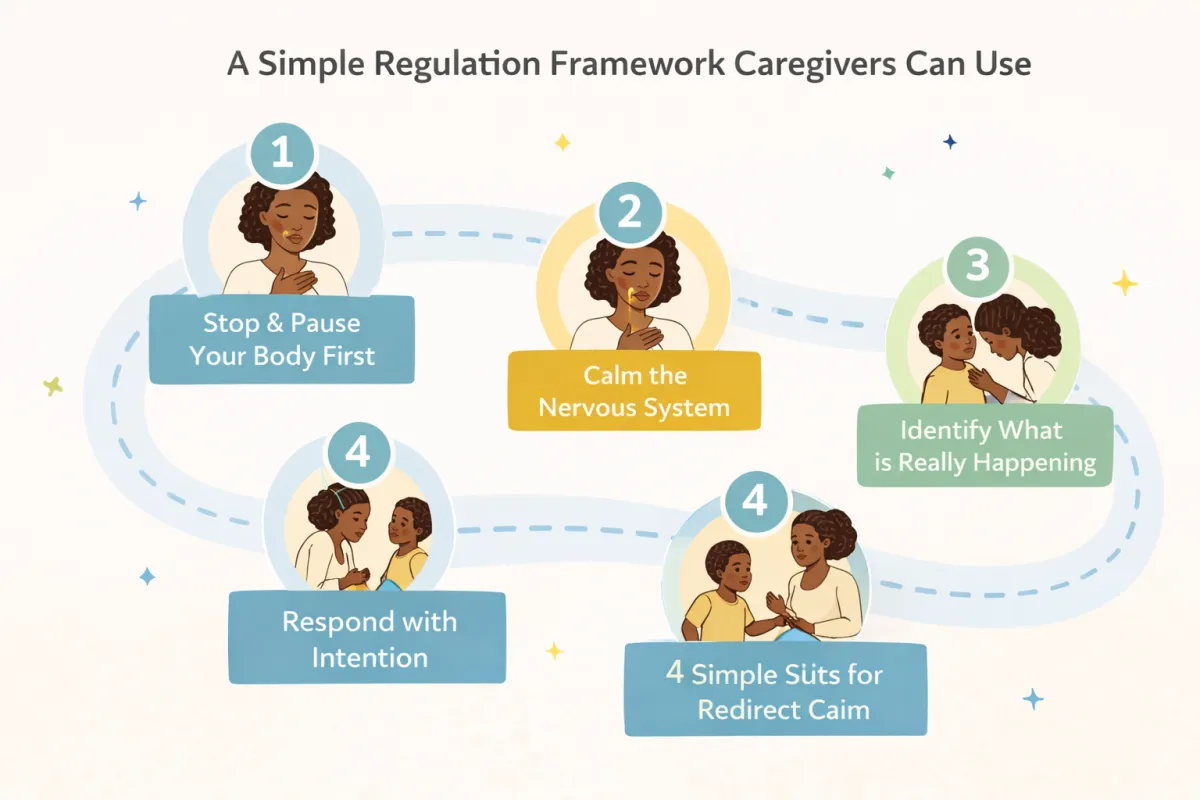
A Simple Regulation Framework
Instead of reacting in the moment, caregivers can learn a repeatable process that supports regulation before discipline.
Frequently Asked Questions
Is this just another discipline strategy?
No. This approach focuses on regulation rather than punishment. It helps caregivers understand what is happening in the nervous system so behavior can be addressed calmly and effectively instead of reacting in the moment.
How quickly can I apply the tools from the guide?
Many caregivers can apply at least one tool the same day they read the guide. The goal is not to change everything at once, but to start with one simple shift and build from there.
What if I already feel overwhelmed as a caregiver?
This guide was created specifically for caregivers who feel overwhelmed. The tools are simple, practical, and designed to work even when stress is high and time is limited.
Will this work for different ages of children?
Yes. Regulation principles apply across different ages because they focus on how the nervous system works, not just behavior techniques.

Ready To Go Deeper?
The Caregiver Regulation Playbook™
$147
If the free guide helped you see behavior differently, the next step is learning how to apply these tools consistently in everyday caregiving situations.
The Caregiver Regulation Playbook™ is a practical system designed to help caregivers prevent burnout, reduce stress, and understand behavior before it escalates.
What’s included:
• A 4 page practical guide for preventing caregiver burnout
• A visual framework explaining behavior and regulation
• Verbatim regulation scripts for real caregiving situations
• Tools that help caregivers regulate themselves first
• A repeatable system for understanding behavior
Copyrights 2026 | The Mental Health Janitors